
Key Takeaways
- Start with a full condition assessment instead of searching for an engine based on a model name alone.
- Repair may be sufficient for an isolated failure, while rebuilding can work when the block, crankshaft, and major components remain serviceable.
- Replacement is often the stronger choice after severe internal damage, repeated breakdowns, or contamination that affects multiple systems.
- Serial numbers, arrangement details, mounts, cooling components, fuel systems, and transmission connections all affect fitment.
- Build a budget that includes labor, supporting parts, testing, fluids, shipping, and lost uptime.
- Confirm emissions and registration requirements before ordering an engine or planning a repower.
When a heavy-duty diesel engine fails, the best decision is rarely the fastest one. Whether the engine powers a truck, excavator, generator, vessel, pump, or industrial machine, owners need to weigh repair cost, downtime, fitment, future reliability, and compliance before committing to a solution. For example, a replacement CAT 3306 engine may be a practical option for the right application, but the engine model alone does not confirm that it will fit the existing machine or supporting systems.
A major engine problem can stop a worksite, delay deliveries, or leave critical equipment unavailable during a busy season. Planning before the failure becomes urgent gives fleet managers and equipment owners more control over budget, sourcing, installation timing, and long-term operating costs.
Why Engine Replacement Planning Matters
Older equipment can still have significant value when its frame, hydraulics, drivetrain, and working components remain dependable. Replacing or rebuilding an engine may extend the useful life of the equipment without the cost of buying a new machine. However, rushed purchasing decisions can result in incorrect flywheel housings, incompatible accessory drives, inadequate cooling capacity, or electronic control problems.
Replacement planning should also account for how the equipment will be used. A standby generator, a long-haul truck, and a quarry loader may use similar engine families but have very different duty cycles, horsepower needs, cooling demands, and emissions obligations. Owners considering a broader upgrade can review examples of diesel replacement and repower projects through the EPA’s National DERA awarded grants page.
Repair, Rebuild, Replace, or Repower?
Repair
A repair is usually appropriate when the problem is limited, and the engine’s major structure is still sound. Examples include a failed injector, a leaking gasket, a worn turbocharger, a damaged sensor, a water pump failure, or an external oil leak. Repairs cost less initially when they address the true cause and no internal damage has occurred.
Rebuild
A rebuild may make sense when cylinders, bearings, pistons, cylinder heads, and other internal components can be measured, machined, or replaced within specification. This option can preserve a known engine configuration, but the result depends heavily on machine-shop quality, available parts, and the condition of reusable components.
Replacement or Repower
A replacement engine is often more practical when there is a cracked block, damaged crankshaft, spun bearing, thrown rod, major overheating event, extensive coolant contamination, or repeated internal failures. Repowering may also be appropriate when the owner needs a different horsepower rating, updated engine package, or an emissions-compliant configuration for the intended application.
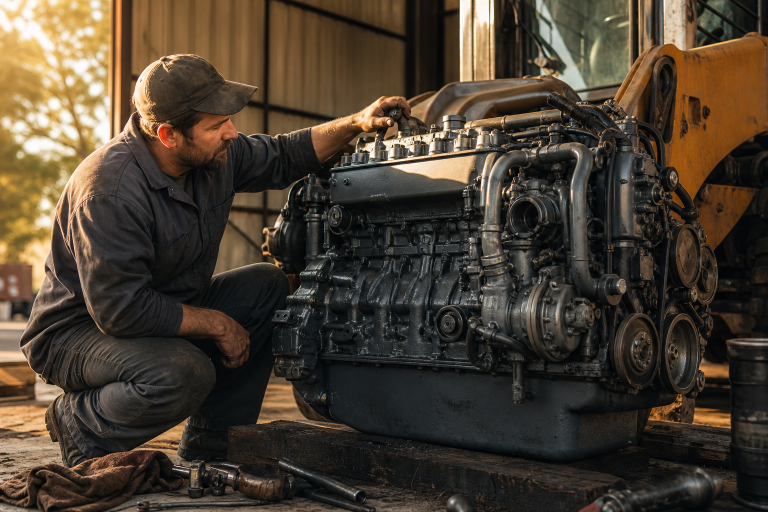
Compare each path using five practical factors:
- Initial cost: Repairs generally cost the least, while complete replacement packages may cost more upfront.
- Downtime: A stocked replacement engine may be faster than a rebuild requiring parts and machine work.
- Risk: Reusing worn accessories or damaged supporting systems can create risk regardless of which option is chosen.
- Warranty: Coverage can differ greatly between repair work, rebuilt assemblies, and complete engines.
- Expected service life: The best value is the option that reliably supports the remaining useful life of the equipment.
Warning Signs of a Major Engine Problem
One symptom does not automatically mean the engine needs replacement. Still, the following signs justify a professional inspection before more damage occurs:
- Low oil pressure, metal in the oil, or debris found in the filter.
- Heavy blow-by, high oil consumption, hard starting, or poor compression.
- Persistent white, blue, or black exhaust smoke.
- Coolant loss with no obvious external leak, repeated overheating, or oil and coolant mixing.
- Loss of power under normal load, abnormal vibration, bearing noise, or rod knock.
Confirm the Root Cause Before Ordering
A replacement engine can fail early if the original failure began outside the engine. Work with a qualified technician to document the engine serial number, arrangement number, application, operating hours, and recent repair history. Oil and coolant analysis, compression testing, cylinder balance testing, and crankcase-pressure checks can help identify internal wear.
The inspection should also include the turbocharger, injectors, fuel pump, air intake, charge-air cooler, radiator, fan, hoses, wiring, and exhaust system. A contaminated fuel system, restricted radiator, failed oil cooler, or leaking intake path can damage a new or rebuilt engine just as quickly as it damaged the old one.
Fitment Checks That Prevent Costly Mistakes
Two engines with similar names are not always direct replacements. Before purchase, verify these details against the existing application:
- Engine serial number, arrangement, horsepower, torque curve, and governing setup.
- Mounting brackets, oil-pan shape, sump location, and available clearance.
- Flywheel, flywheel housing, clutch, torque converter, or transmission connection.
- Fuel-system type, intake and exhaust routing, turbocharger layout, and aftercooler design.
- Cooling-package capacity, radiator connections, fan drive, electrical connections, and control systems.
An engine may physically fit inside the compartment but still be incompatible with the transmission, cooling package, hydraulic pump drive, or accessory arrangement. Confirm these details before freight is scheduled.
Choose the Right Assembly Level
A short block typically includes the lower engine assembly and may require the reuse of the cylinder head and many external components. A long block is more complete and can reduce machine-shop work. A complete engine may include additional fuel, intake, cooling, exhaust, and accessory components. The correct choice depends on what survived the original failure and how much installation risk the owner is willing to accept.
Budget Beyond the Engine Price
A realistic budget includes shipping, removal, and installation labor, fluids, filters, belts, hoses, seals, mounts, turbocharger work, fuel-system service, cooling repairs, electrical changes, fabrication, disposal, testing, and commissioning. Add contingency funds for seized fasteners, damaged wiring, worn accessories, or hidden contamination. Lost revenue from equipment downtime should be treated as part of the replacement decision, not an afterthought.
Emissions and Compliance Checks
Before selecting an engine, confirm the equipment’s use category and operating location. Highway vehicles, off-road equipment, marine engines, generators, and stationary units can be subject to different federal, state, local, registration, and inspection requirements. Keep records for the engine, installation, emissions-related components, and any calibration work. Owners operating older diesel equipment in California should also review the California Air Resources Board’s heavy-duty diesel retrofit guidance before making changes.
A Practical Replacement Workflow
- Document the failure symptoms, test results, and visible damage.
- Identify the application, duty cycle, load demands, and operating environment.
- Confirm serial, arrangement, mounting, accessory, and transmission details.
- Compare repair, rebuild, long-block, complete-engine, and repower options.
- Budget for the complete job, including downtime and related-system repairs.
- Clean, inspect, and repair the cooling, fuel, air, exhaust, and electrical systems.
- Install using correct torque values, priming procedures, fluids, and startup checks.
- Monitor temperatures, pressures, leaks, smoke, vibration, and oil condition during early operation.
Common Installation Mistakes to Avoid
- Ordering by engine model name alone.
- Reusing contaminated oil, coolant, filters, or fuel-system components.
- Skipping radiator, charge-air cooler, and transmission-connection inspections.
- Using incorrect hoses, belts, fittings, sensors, or accessory brackets.
- Starting the engine without proper lubrication and fuel-system priming.
- Failing to document the installation and inspect the first oil and filter change.
Conclusion
The right diesel engine decision begins with diagnosis, not a quick purchase. Careful testing, correct identification, fitment verification, complete budgeting, and compliance checks can help owners avoid repeat failures and unnecessary downtime. Whether the best route is repair, rebuild, replacement, or repower, a documented plan protects both the equipment and the operation that depends on it.