
In the world of digital marketing, SEO audits are crucial. They help identify issues affecting a website’s search engine performance. But how should you conduct these audits?
There are two main approaches: using SEO audit tools or performing manual SEO audits. Each method has its own strengths and weaknesses.
SEO audit tools offer automation and speed. They can quickly scan websites and generate detailed reports. This saves time and effort for busy marketers.
On the other hand, manual SEO audits provide a personalized touch. They allow for a deeper understanding of a website’s unique challenges.
Choosing between these methods can be challenging. It depends on your specific needs and resources.
This article will explore both approaches in detail. We’ll help you decide which is better for your SEO success. For teams weighing the cost of running a full audit-tool stack, providers like Group Buy SEO Tools offer a lower-cost, shared-access route into several of the platforms mentioned below.
Understanding SEO Audits: The Basics
SEO audits evaluate a website’s health in relation to search engine guidelines. They focus on key factors affecting visibility and ranking.
The process involves examining various elements. These include on-page content, site architecture, and technical components. An effective SEO audit highlights issues impeding performance.
A typical SEO audit covers multiple areas. These could encompass site speed, mobile responsiveness, and link quality.
Key areas of focus in an SEO audit often include:
- Keyword optimization
- Mobile-friendliness
- Content quality
- Backlink profile
- Technical structure
Conducting regular audits is essential. They ensure ongoing SEO efforts align with the latest search engine standards.
SEO audits keep you informed about competitors and industry trends. They help maintain and improve rankings in a competitive landscape. Regular audits support strategic decision-making. This ultimately leads to increased traffic and improved online presence.
What Are SEO Audit Tools?
SEO audit tools automate the process of evaluating a website’s SEO health. They identify issues affecting search engine rankings.
These tools are designed to scan websites quickly. They generate detailed reports highlighting various problems that need attention.
Many SEO audit tools offer user-friendly interfaces. They provide insights into both technical and on-page SEO elements.
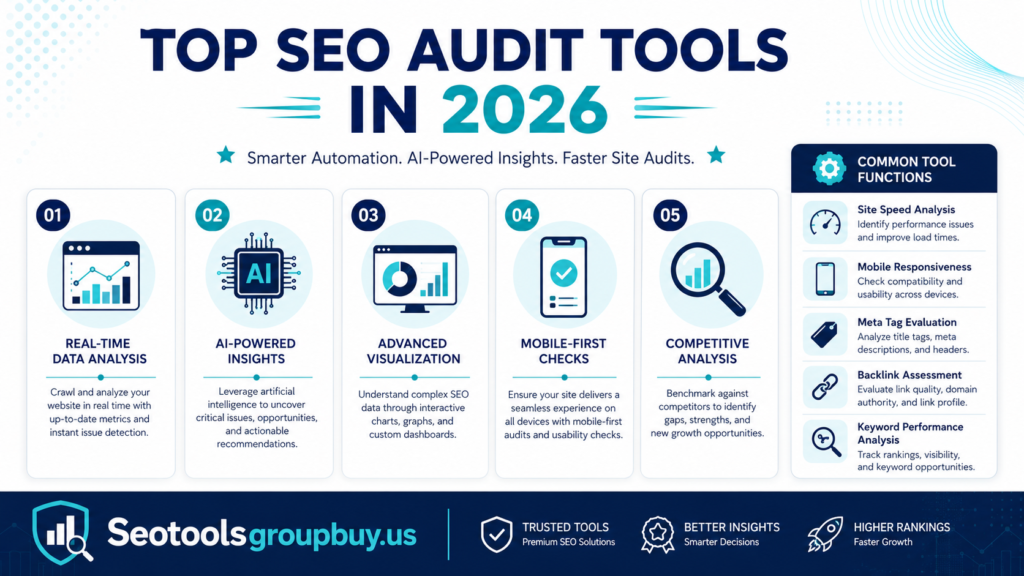
Common features of SEO audit tools include:
- Site speed analysis
- Mobile responsiveness checks
- Meta tag evaluation
- Backlink assessment
- Keyword performance analysis
Site audit software helps manage large websites effectively. Automated scans reduce the time and effort needed for manual audits.
These tools are valuable for businesses of all sizes. Small businesses benefit from cost-effective solutions, while large organizations appreciate streamlined processes.
SEO audit tools also allow continuous monitoring. This ensures swift detection and resolution of emerging issues.
Understanding the capabilities of different tools can be beneficial. Businesses can select those that align best with their specific requirements.
Incorporating SEO audit tools into your strategy supports data-driven decisions. These tools enhance the potential for improved search engine performance.
What Is a Manual SEO Audit?
A manual SEO audit involves a comprehensive, hands-on evaluation of a website’s SEO status. It provides a personalized analysis tailored to the site’s specific needs.
Unlike automated tools, manual audits require an expert’s insight. They dive deep into the website’s strengths and weaknesses. Agencies running these audits alongside licensed software often look at shared-access providers like SEO Group Buy to keep tool costs down while still giving analysts the platforms they need.
Manual audits examine multiple facets of SEO. This includes technical, on-page, and off-page elements. The analysis is thorough and nuanced.
Key areas typically covered in a manual audit are:
- Website architecture and navigation
- Content quality and relevance
- Keyword optimization
- Competitor comparison
- User experience and engagement
These audits are more time-consuming but offer deeper insights. They allow for a tailored approach to unique website challenges.
Manual SEO audits often reveal issues that tools might overlook. They take into account industry trends and competitor strategies.
Moreover, the personalized nature of manual audits helps in crafting a specific action plan. This can significantly improve a website’s search engine visibility.
For businesses seeking detailed and custom insights, manual audits are highly valuable. They ensure that SEO strategies align well with business goals and market dynamics.
Key Features of Top SEO Audit Tools in 2026
The landscape of SEO audit tools is constantly evolving. In 2026, the top tools are anticipated to be more advanced and user-friendly.
These tools are expected to integrate artificial intelligence for smarter analysis. This will allow for deeper insights and precise recommendations.
Automation will be at the forefront. This means faster audits and less manual intervention, saving significant time and resources. Businesses evaluating which of these premium tools to subscribe to individually versus access through a bundled plan can compareSeo Tools Group Buy as another shared-access option.
Key features anticipated in 2026 include:
- Real-time data analysis
- Advanced visualization of SEO data
- Seamless integration with other marketing platforms
Moreover, these tools will likely offer enhanced user experience. They’ll be intuitive, making them accessible even to those with minimal SEO knowledge.
Security features will also be a priority. As cyber threats evolve, protecting data integrity will become indispensable.
Many tools will focus on mobile-first indexing. Given the increasing mobile internet usage, ensuring mobile optimization is key.
Additionally, these tools are expected to provide extensive competitive analysis capabilities. Understanding competitors’ strategies can offer invaluable insights for businesses.
Alongside AI, machine learning will play a pivotal role. It’ll help predict market trends and offer customized recommendations.
In summary, the best SEO audit tools for 2026 will be intelligent, comprehensive, and user-friendly. Businesses will benefit from more effective and efficient SEO strategies.
Staying ahead in SEO will require using such cutting-edge tools. They will ensure websites are optimized for both current demands and future trends.
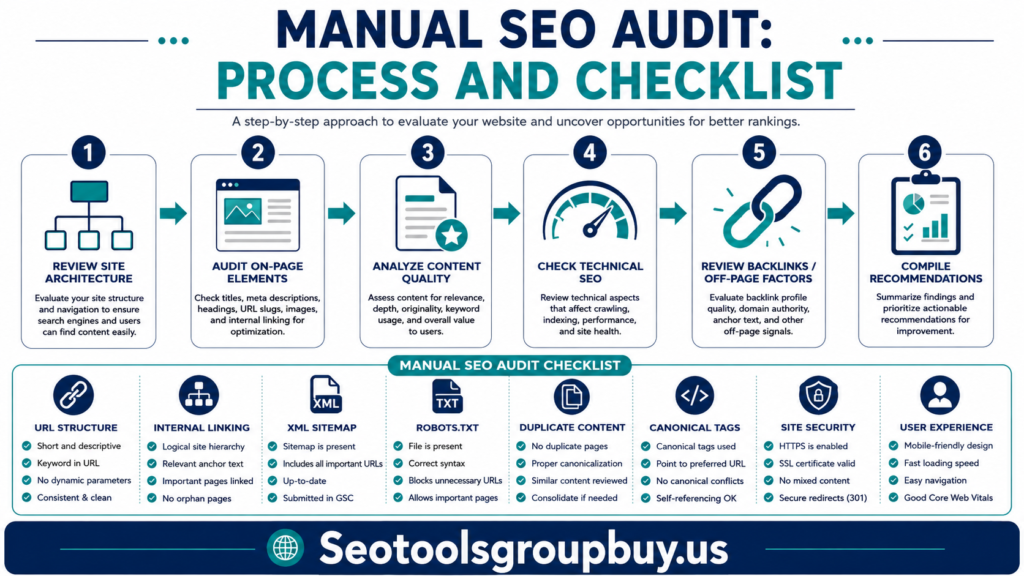
Manual SEO Audits: Process and Checklist
Manual SEO audits offer a bespoke approach to examining a website’s performance. Unlike automated tools, they involve a hands-on analysis by SEO experts.
The process begins with a thorough review of the website’s architecture. This helps identify structural issues that might impact search engine crawling and indexing.
Next, on-page elements are scrutinized. This includes evaluating the effectiveness of titles, meta descriptions, and headers.
A comprehensive content analysis follows. It focuses on the quality and relevance of the website’s content, assessing keyword usage and engagement factors.
Technical aspects such as site speed and mobile responsiveness are crucial parts of the audit. Any server or code-related issues are meticulously examined.
Off-page factors like backlink quality and quantity are also reviewed. This helps in understanding the website’s authority and reputation online.
A typical manual SEO audit checklist might include:
- Review of URL structure and internal linking
- Evaluation of XML sitemaps and robots.txt files
- Analysis of duplicate content and canonical tags
The final step in a manual SEO audit involves compiling a detailed report. This report highlights areas for improvement and provides tailored recommendations.
Key components of the audit checklist often encompass:
- Assessment of social media integration and signals
- Examination of site security, especially HTTPS status
- Evaluation of user experience and design elements
Manual audits, while time-consuming, offer deep insights. They uncover nuanced issues that automated tools might miss, making them invaluable for complex SEO challenges.
Pros and Cons: SEO Audit Tools vs Manual SEO Audits
Choosing between SEO audit tools and manual audits can be challenging. Each approach has unique advantages and limitations.
SEO audit tools are popular for their speed. They can quickly scan websites and provide instant reports.
Automation helps save time and effort. This is crucial for businesses with large sites and limited resources.
However, these tools may miss nuanced issues. Their automated nature can result in overlooking specific unique site challenges.
Manual audits, on the other hand, offer detailed insights. They allow for a personalized evaluation of a website’s SEO performance.
Experienced SEO professionals can identify complex problems. Their expertise often uncovers hidden opportunities for improvement.
Nevertheless, manual audits can be time-consuming and costly. They demand a high level of SEO knowledge and experience.
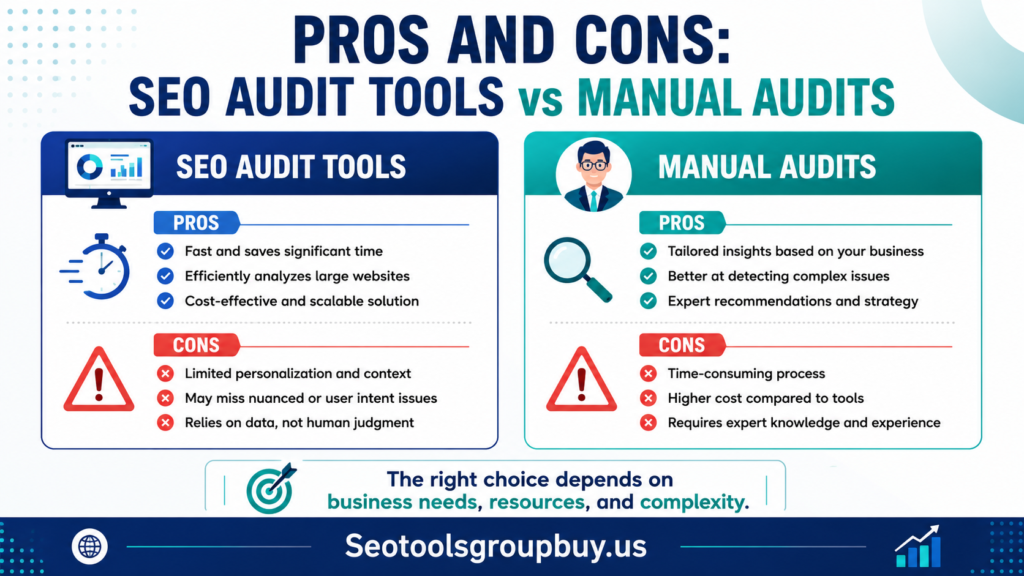
Here’s a list of the pros and cons for SEO audit tools:
Pros:
- Fast and efficient
- Cost-effective for small businesses
- Comprehensive reports covering multiple SEO aspects
Cons:
- May overlook specific issues
- Limited personalization
- Dependence on software updates
On the flip side, manual audits offer their own set of advantages and drawbacks:
Pros:
- Tailored insights specific to the website
- Ability to detect complex issues
- Expert-driven recommendations
Cons:
- Time-consuming process
- Higher costs involved
- Requires expert knowledge
Ultimately, the decision depends on a business’s specific needs. Some may benefit from tool efficiency, while others need the depth of a manual audit.
Technical SEO: Tools vs Manual Checks
Technical SEO is vital for a website’s foundation. It involves ensuring that a site’s infrastructure supports SEO efforts effectively.
SEO tools for technical audits automate many processes. They can swiftly identify server issues, coding errors, and site speed problems.
These tools often include features for tracking crawl errors. Some even assess mobile-friendliness and XML sitemap functionality.
Despite their efficiency, automated tools have their limits. They may not pinpoint all underlying technical glitches.
In contrast, manual checks provide a thorough examination. Experienced SEO experts delve deeper into source code, server settings, and more.
They can spot intricate problems affecting search engine indexing. This level of analysis often yields comprehensive solutions for complex issues.
Here’s a concise summary of how tools compare to manual checks:
Advantages of Tools:
- Quick identification of common technical issues
- Useful for continuous monitoring
- Helpful for immediate fixes
Advantages of Manual Checks:
- Detailed assessment of complex technical concerns
- Expertise-driven insights and recommendations
- Ability to find issues that software may miss
Choosing the right method depends on resources and goals. Some might opt for the speed of tools, while others might prefer the depth of manual checks.
On-Page SEO: Automated vs Human Analysis
On-page SEO focuses on optimizing individual pages for search engines. It ensures that content is relevant and meets user intent.
Automated on-page audit tools provide quick insights. They can assess keyword usage, header structures, and meta tags efficiently.
These tools excel at highlighting missing or duplicated metadata. They also check for broken links and optimize image alt texts.
However, automated analysis may miss nuances in content quality. It often overlooks elements like user engagement and content flow.
Human analysis, on the other hand, offers a deeper evaluation. Experts can assess keyword relevance and page readability in context.
They bring a nuanced understanding of audience behavior and expectations. This helps in crafting content that attracts and retains users.
When deciding between automated and manual analysis, consider these factors:
Pros of Automated Tools:
- Quick identification of on-page elements needing optimization
- Consistency in applying best practices
- Time-saving and scalable for larger sites
Pros of Human Analysis:
- Rich insights into content quality and user engagement
- Ability to tailor content strategy based on nuanced insights
- Creative adjustments to improve overall user experience
Choosing the best method depends on content goals and available resources. A balance between tools and human expertise often yields the best results.
Local SEO Audits: Tools for Agencies vs Manual Expertise
Local SEO is crucial for businesses targeting specific geographic areas. It involves optimizing a website to attract local customers.
Tools designed for local SEO audits help automate this process. These tools analyze local search performance and identify optimization opportunities.
They offer insights into local citation accuracy, Google My Business listings, and reviews. This helps in maintaining consistent NAP (Name, Address, Phone number) across platforms.
However, manual expertise in local SEO brings added value. Experts can assess the local market and understand unique community needs.
Agencies may utilize tools for efficiency but supplement with manual audits. This combination ensures a thorough understanding of local search dynamics.
When evaluating local SEO strategies, consider these points:
Local SEO Tools Offer:
- Quick checks of local listings’ accuracy
- Automated monitoring of local rankings
- Comprehensive reports on local SEO health
Manual Expertise Provides:
- Insight into community trends
- Personalized recommendations based on local audience analysis
- Adaptation to local market changes and preferences
Combining both approaches enhances local reach and engagement, offering comprehensive solutions for businesses seeking local visibility.
White Label SEO Audit Tools: Value for Agencies
Agencies often seek tools that enhance client service without revealing their sources. White label SEO audit tools offer a tailored solution.
These tools allow agencies to present SEO audit reports with their branding. This builds client trust and reinforces agency credibility.
Agencies using these tools can deliver consistent and professional reports. Clients receive comprehensive insights under the agency’s banner.
White label tools also help streamline processes and maintain customer satisfaction. Enhanced efficiency means agencies can focus on strategy rather than manual reporting.
Key benefits of white label SEO audit tools include:
Customization Options:
- Branding with agency logos and colors
- Personalization of audit templates and formats
Efficient Client Management:
- Automated report generation
- Consistent, error-free output, enhancing client relations
Utilizing white label tools allows agencies to provide seamless, branded services, ultimately boosting their reputation and client loyalty.
SEO Reporting and Performance Analysis: Tools vs Manual Insights
Analyzing SEO performance is crucial for measuring success and identifying areas for improvement. SEO reporting tools deliver data-driven insights quickly.
These tools generate reports that visually communicate SEO progress. They provide measurable metrics which are essential for decision-making.
Automated reports highlight trends and help track key performance indicators (KPIs). Yet, they can sometimes overlook nuances that require human understanding.
Manual insights offer a different perspective. Experts can interpret complex data and provide context to numbers, leading to deeper insights.
Key aspects of tools vs manual analysis include:
Automated Tools:
- Deliver quick, consistent metrics
- Suitable for tracking standard KPIs across time
Manual Insights:
- Offer nuanced understanding of data
- Provide context that tools may miss
Ultimately, combining automated tools with manual insights can offer the best of both worlds. A balanced approach ensures comprehensive performance analysis, improving strategic planning and implementation.
When to Use SEO Audit Tools
SEO audit tools are invaluable for streamlining SEO processes. They are perfect when time and resources are limited.
These tools are particularly beneficial for large websites. Automating the process can rapidly identify technical issues across numerous pages.
Businesses with small teams often rely on these tools. They offer a cost-effective solution for extensive audits without hefty manpower expenses.
Use SEO audit tools when you need:
- Quick insights into technical SEO issues
- Automated tracking of changes over time
- Routine checks of on-page and technical health
For regular monitoring, these tools can ensure that websites remain in optimal condition. They provide consistency and save valuable time, especially when facing tight deadlines or lacking specialized staff.
When to Choose Manual SEO Audits
Manual SEO audits offer personalized insights into your website’s SEO performance. They are ideal when a tailored approach is needed.
These audits are beneficial for identifying unique challenges that automated tools may overlook. They dig deeper into specific issues that require expert analysis.
Choose manual SEO audits when:
- You need a detailed examination of complex SEO problems
- Your website has unique elements or custom setups
- You require strategic recommendations beyond technical fixes
Opt for manual audits when nuanced understanding of your site’s specificities is crucial. They provide strategic insights that pre-packaged tools often miss, enhancing overall strategy and aligning SEO efforts with broader business goals.
Combining SEO Audit Tools and Manual Audits: The Hybrid Approach
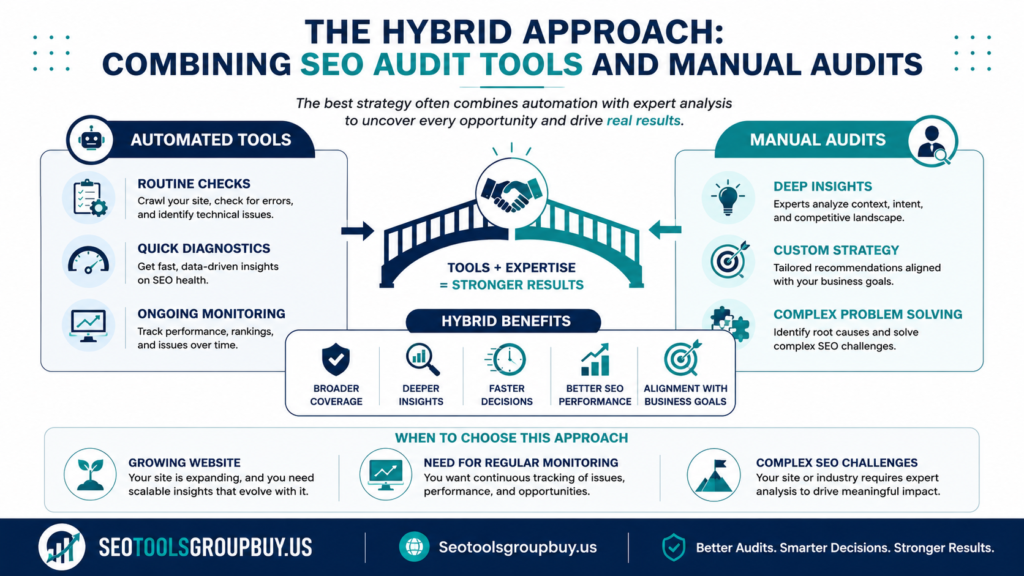
Using both SEO audit tools and manual audits can create a balanced strategy. This approach leverages the strengths of automation and expert analysis.
SEO audit tools quickly identify numerous technical issues. They offer broad overviews with speedy diagnostics. Manual audits, on the other hand, provide detailed insights. They focus on intricate aspects of your website’s SEO performance.
Adopting a hybrid approach is beneficial when you want to:
- Utilize automated tools for recurring checks and broad assessments
- Gain deeper insights into complex problems
- Tailor your SEO strategy with expert insights
This synergy allows for a thorough audit, addressing both surface-level and underlying issues. The combination ensures nothing is overlooked, making it easier to enhance your site’s SEO effectiveness. Such an integrated methodology provides a comprehensive picture, optimizing your site’s performance and aligning it closely with your business objectives. A hybrid strategy is often the best way forward.
How to Choose the Best Approach for Your Business
Deciding between SEO audit tools and manual audits hinges on your business needs. Consider your resources and SEO goals carefully.
Begin by evaluating your budget. Automated tools are often more cost-effective for regular checks. Yet, if your budget allows, occasional manual audits provide tailored insights.
Next, assess your team’s expertise. If your team lacks SEO proficiency, tools are easier to navigate. However, in-depth analysis requires seasoned professionals.
Identify your primary focus areas:
- Technical challenges requiring precise solutions
- Ongoing performance monitoring
- Comprehensive, detailed reports
Finally, consider your timeline. Automated tools deliver quick results, whereas manual audits take time. Balance urgency with depth of analysis to meet your objectives. This ensures you choose a strategy aligned with your business’s unique requirements. By weighing these factors, you can decide the most effective approach for enhancing your SEO success.
Best SEO Audit Tools in London and Globally for 2026
The best SEO audit tools in 2026 promise to reshape the SEO landscape. These tools showcase enhanced capabilities, driven by technological advances. Both local and global tools are set to offer remarkable features.
London stands out as a hub for innovative SEO solutions. The city’s best tools lead in terms of user-friendly interfaces and comprehensive analytics. They address diverse SEO challenges with ease and precision. Meanwhile, global tools continue to integrate cutting-edge technologies. These include AI, machine learning, and advanced data analytics. Such advancements provide unparalleled insights into SEO performance.
When choosing the best tools, consider the following key aspects:
- Integration with existing systems
- Customizability and scalability
- User support and resource availability
In 2026, these audit tools offer businesses the advantage of staying competitive. They empower users with actionable insights and efficient solutions. Selecting the right tool will be pivotal for sustained SEO success. Businesses must evaluate their specific needs against available options. Thus, making the right choice becomes crucial for maintaining a competitive edge.
Conclusion: Which Is Better for Your SEO Success?
Deciding between SEO audit tools and manual audits depends on your specific needs and resources. SEO audit tools provide quick insights and are perfect for routine checks. They save time and are cost-effective for small businesses with limited budgets.
On the other hand, manual SEO audits offer a personalized approach. They are ideal for uncovering nuanced issues and developing tailored strategies. While they demand expertise and can be more expensive, the depth of analysis is unparalleled.
A hybrid approach, combining both methods, often yields the best results. By leveraging the strengths of each, businesses can ensure comprehensive SEO coverage. Ultimately, understanding your objectives and resources will guide the best choice. Evaluate your business needs to determine the most effective way to boost your site’s SEO success.